
Choosing the right shower hose can seem hard. You need a hose that is safe and strong. It should also fit your bathroom. Many people do not check the length or diameter. Some forget to look at the hose fittings. Others do not pick hoses with anti-kink designs. Some hoses do not handle heat well. Some people buy hoses that are not safe for drinking water.
- Not picking the right hose length
- Not thinking about diameter or water flow
- Not making sure the fittings match
- Not choosing hoses with anti-kink features
- Not checking if the hose can handle heat
- Not picking hoses that are easy to clean
- Picking hoses that are not safe or good quality
Shower Hose Materials & Features
Material Types
When you pick a shower hose, you have a few main materials to choose from. Each one has its own strengths and weaknesses. Here’s a quick look:
| Material | Durability | Safety Rating |
|---|---|---|
| PVC | Not resistant to cold, heat, aging | Toxic, strong smell when heated |
| EPDM | Accumulates gunk | Toxic |
| 304 Stainless Steel | Corrosion resistant, flexible | Safe for drinking |
| Silicone | Non-toxic, resistant to build-up | Safe for kitchen and medical use |
Stainless steel hoses last longer than plastic ones. They resist corrosion, kinking, and cracking. High-grade PVC can work, but it does not last as long as stainless steel. EPDM hoses last a bit longer than regular PVC, but still do not match the durability of stainless steel.
Drinking Water-Safe Options
You want your shower hose to be safe, especially if you have kids or pets. Some hoses can leach chemicals like lead or phthalates into the water, especially when hot. Look for hoses that meet standards like NSF/ANSI 61 or NSF/ANSI 372. These certifications mean the hose will not add harmful substances to your water. Non-safe hoses can also let bacteria and mold grow inside, which is not good for your health.
Tip: Always check for drinking water-safe labels when you buy a new shower hose.
Anti-Kink & Easy-Clean Features
Nobody likes a hose that tangles or stops the water. Anti-kink designs keep the water flowing, even if you twist or fold the hose. Many top models, like Pocket Hose or FlexAbleHose, resist kinking and do not lose water flow when bent. Stainless steel hoses also stay cleaner than plastic ones. They do not trap as much gunk or let mold grow. If you clean your hose regularly, you help keep your shower safe and fresh.
Choosing the Right Shower Hose
Length & Flexibility
The right shower hose length makes your shower easier. Short hoses work best in small bathrooms. Long hoses are good for big bathrooms. You get more reach and comfort with a longer hose. Experts suggest different lengths for each bathroom size:
| Shower Hose Length | Recommended Bathroom Type | Description |
|---|---|---|
| 12 inches | Small bathrooms | Great for tight spaces, helps you reach hard spots. |
| 18 inches | Standard bathrooms | Gives you room to move, but does not take up space. |
| 24 inches | Large bathrooms | Lets tall people reach more, no need to move things. |
Flexibility is important too. A flexible hose lets you move the shower head easily. You can wash your hair or clean the tub without trouble. It is also good for washing kids and pets. Flexible hoses do not kink, so water keeps flowing. They are easy to install and fit in small spaces.
Tip: Pick a hose that bends well and does not tangle.
- Flexible hoses help you move the shower head where you want.
- They make it easy to set up your shower, even if it is different.
- Universal connectors let you use the hose with most showers.
Diameter & Flow Rate
The diameter of your shower hose changes the water flow. Small diameter hoses give you less water. Big diameter hoses let more water through. This makes your shower feel stronger.
| Diameter | Water Flow Rate | Water Velocity |
|---|---|---|
| Smaller | Lower | Higher |
| Larger | Higher | Lower |
If the hose is small, water moves faster but you get less of it. If you want a strong shower, pick a hose with a bigger diameter. This gives you a steady stream and better rinsing.
Fittings & Compatibility
Check the fittings before you buy a new shower hose. The hose must fit your shower head and pipes. Most hoses in the United States and Europe use the same size:
| Region | Standard Size | Standard Type |
|---|---|---|
| United States | 1/2 inch | National Pipe Thread (NPT) |
| Europe | 1/2 inch | British Standard Pipe (BSP) |
Some shower heads, like the Waterpik 240327BX, do not fit standard hoses. You might have problems if your home has a different connector. Always check the threading and size first. If you do not, your hose might not fit.
- Fitting problems happen when the hose end does not match.
- Old homes or apartments may have special connectors.
- Look at the package to see if it will fit.
Note: Universal fit hoses are easy to install and save you time.
Types: Handheld, Fixed, Wall-Mounted
There are different types of shower hoses. Each type is good for different needs.
| Feature | Fixed Shower Head | Handheld Shower Head |
|---|---|---|
| Mobility | Stays in place | Moves around easily |
| Installation | Easy wall-mount | Needs a hose |
| Water Control | Not much control | More control |
| Cleaning Ease | Not flexible | Easy to clean with |
| Cost | Cheaper | Can cost more |
| Spray Options | Basic spray | Many spray choices |
| Best for | Daily showers | Family, pets, cleaning |
| Water Efficiency | Same flow always | May use more water |
Handheld shower hoses are the most flexible. You can move the shower head to wash kids or pets. You can also clean the shower walls easily. Experts say handheld hoses are good for people who need help moving. These hoses let you sit while you shower. They help caregivers stay dry. If you want more freedom or need to help someone, pick a handheld shower hose.
- Handheld hoses are good for everyone and make bathing easier.
- Fixed heads stay in one spot and cost less, but do not move.
- Wall-mounted hoses are strong and let you move the shower head a little.
Tip: For a shower that works for your whole family, choose a handheld hose that bends easily.
Style, Maintenance & Budget
Matching Bathroom Style
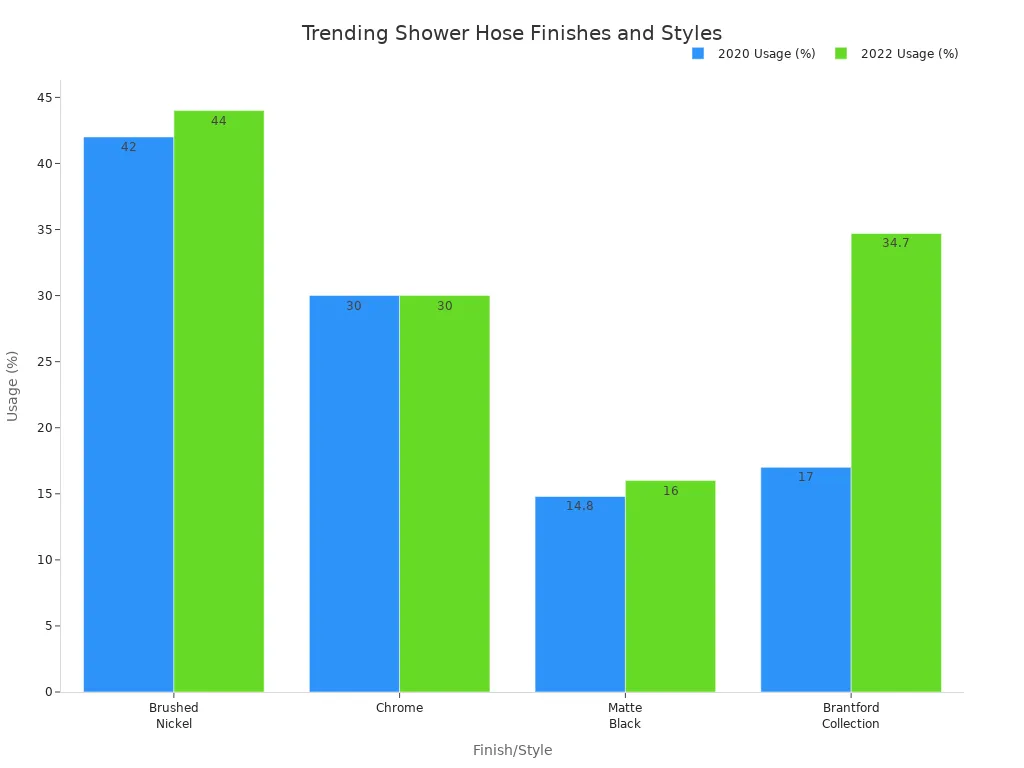
You want your bathroom to look great, so picking the right finish for your shower hose matters. Some finishes are more popular than others. Brushed nickel and chrome are classic choices and fit most modern bathrooms. Matte black is trendy and gives a bold look. The Brantford Collection has also become more popular in recent years. Here’s a quick look at what’s trending:
| Finish/Style | 2020 Usage (%) | 2022 Usage (%) |
|---|---|---|
| Brushed Nickel | 42 | 44 |
| Chrome | 30 | 30 |
| Matte Black | 14.8 | 16 |
| Brantford Collection | 17 | 34.7 |
Tip: Match your shower hose finish to your faucet or other fixtures for a pulled-together look.
Cleaning & Care Tips
Keeping your shower hose clean helps it last longer and keeps your water fresh. Here’s how you can do it:
- Use a soft cloth with mild soap and water. Skip harsh pads or powders.
- Wipe the hose every week to stop limescale and soap buildup.
- Stick to vinegar or mild soap. Avoid strong chemicals that can damage the finish.
- Deep clean your hose every few months, especially if you have hard water.
- Clean the shower head and handle once a month.
Note: Regular cleaning keeps your shower hose looking new and working well.
Budget & Brand
You do not have to spend a lot to get a good shower hose. Most high-quality hoses cost between $0.35 and $4.40 each. Premium models, like those with brushed nickel finishes, cost a bit more but last longer. Brands like HammerHead Showers use 304 stainless steel and solid brass connectors. These features make them strong and reliable. Budget hoses save money up front, but premium hoses give you better performance and last longer.
| Feature | Budget Models | Premium Models |
|---|---|---|
| Durability | May lack durability | High-quality materials |
| Performance | Basic features | Extra functions |
| Cost-effectiveness | More affordable | Better longevity |
Tip: Choose a trusted brand for better quality and customer satisfaction.
When you pick a shower hose, think about what matters most to you. Look for strong materials, safety-tested features, and a style that fits your space.
- Metal hoses shine and resist kinks, while plastic ones feel warmer but may crumple.
- Certified hoses handle heat and stop mold.
- Anti-kink and easy-clean designs make life easier.
Check your fittings and measure your space. With these tips, you can find a hose that works for your bathroom and keeps everyone safe.
FAQ
How do you know if a shower hose will fit your shower head?
Check the connector size on your shower head. Most use a 1/2-inch fitting. Look for “universal fit” on the hose package.
Tip: Bring your old hose to the store for a quick match!
Can you use any shower hose with hot water?
Most modern hoses handle hot water. Stainless steel and silicone hoses work best. Always check the label for temperature limits before you buy.
How often should you replace your shower hose?
Replace your hose every 2–3 years. If you see leaks, cracks, or mold, swap it out sooner. Regular cleaning helps your hose last longer.